
**1. The News** A perspective published in *Aging and Disease*, as reported by Lifespan.io, has proposed the use of underground laboratory space to eliminate the effects of ambient radiation on aging. The researchers argue that low-radiation environments could slow cellular aging and offer a unique opportunity to isolate radiation's role in aging biology.
**2. Why It Matters** This proposal holds groundbreaking potential for aging research. If ambient radiation's impact on aging is confirmed, it could not only deepen our scientific understanding but also open new avenues for radiation protection strategies and longevity interventions. This is particularly significant for populations living in high-radiation areas or countries relying on nuclear energy. Additionally, it is critical for understanding the health effects of increased radiation exposure during space travel on astronauts.
**3. Context & Examples** Historically, studies on biological effects of radiation have focused on high doses. However, chronic low-dose radiation effects remain debated. For instance, epidemiological studies after Chernobyl and Fukushima suggest increased cancer risk from low-dose radiation, but effects on aging are unclear. Conversely, some animal experiments indicate that low-dose radiation may actually extend lifespan through hormesis.
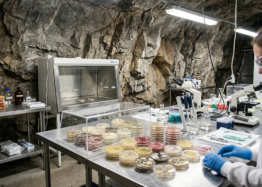
Underground labs provide a unique environment to address these questions. Facilities like Italy's Gran Sasso National Laboratory and Canada's SNOLAB are known for their low background radiation. While primarily used for neutrino physics, they can be adapted for biological experiments. A previous study in such an environment showed that low radiation reduced oxidative stress and extended lifespan by 20% in *Drosophila melanogaster*.
Furthermore, a 2018 study in *Nature* found that mice raised in an underground low-radiation environment had less DNA damage compared to surface-raised controls. These findings suggest that ambient radiation has a measurable effect on aging.
**4. Forward Look** This perspective could mark the beginning of a new era in aging research. In the coming years, we are likely to see controlled experiments on human cell cultures and animal models in underground labs. However, limited facilities and high operational costs pose challenges. If radiation's effect on aging is confirmed, it could lead to revised radiation protection standards and even the use of low-radiation environments for health benefits. Long-term, such research may inform strategies for human settlement in high-radiation environments like Mars. Ultimately, this proposal highlights an underexplored area in aging science and opens an exciting research frontier.